
Lean Awareness Course
See Waste. Create Flow. Drive Improvement.
Why it matters:
This session introduces the core principles of Lean thinking and continuous improvement in a way that’s practical and easy to apply.
Participants will explore how to spot inefficiencies in everyday processes, reduce waste, and create more value with fewer resources. Through real-world examples and interactive discussion, the session helps teams understand the mindset behind continuous improvement — not just the tools — and how to embed a culture of operational excellence that drives long-term results across the organisation.
What we cover
Types of Work
Understand the difference between Value-Adding, Non-Value-Adding, and Waste and why it matters for performance and profitability.
The 9 Wastes
Learn to spot the nine key forms of waste (e.g. overproduction, waiting, defects) that slow down processes and drain resources.
Lean Tools & Techniques
Get hands-on with practical tools including:
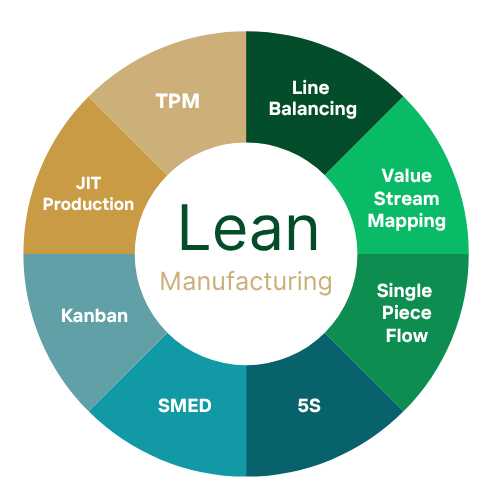
- 5S – Workplace organisation for efficiency and safety
- Kaizen – Continuous, incremental improvement
- SMED – Quick changeover techniques to reduce downtime
- TPM – Total Productive Maintenance for equipment reliability
Lean Principles (Womack & Jones)
Explore the five foundational principles of Lean and how they apply across sectors.
The Fire Engine Simulation
A dynamic, experiential activity that brings Lean concepts to life—highlighting the impact of flow, pull, and standardisation in real time.
Why it matters
In a competitive and cost-sensitive environment, Lean thinking helps organisations do more with less, without compromising quality. This session builds awareness, alignment and momentum for continuous improvement across your teams.
Who it’s For:
- Frontline teams and supervisors
- Operational and support staff
- Cross-functional teams in manufacturing, service, or digital roles
- Anyone new to Lean or continuous improvement
Core skills developed
- Identifying and Reducing Waste – Spot inefficiencies and eliminate non-value-added activity
- Applying Lean Tools – Use 5S, Kaizen, SMED, and TPM to improve flow and reduce downtime
- Understanding Lean Principles – Apply the Womack & Jones framework to real-world processes
- Problem Solving and Root Cause Thinking – Build a mindset of curiosity and continuous improvement
- Customer-Centric Thinking – Focus on what adds value from the customer’s perspective
- Team Collaboration – Work together to streamline processes and improve outcomes
We live by our values
We simplify complexity with straight-talking solutions
We ask better questions to unlock smarter answers
We listen carefully and speak clearly
We work with you, not just for you